How to Get Your Kids to Read (Even If They Say They Hate Books)

Let’s just say it: getting some kids to read feels like trying to convince a cat to take a bath. There’s wiggling. There’s dramatic resistance. There’s the occasional, “BUT READING IS BORING!”
And as a mom, especially one who loves books, this can sting a little. You’ve dreamed of snuggling on the couch with your child and a pile of books… not battling over ten measly minutes of reading time.
But before you declare yourself a bookworm failure and resign your parenting badge, take heart: reluctant readers are more common than you think, and the key isn’t forcing reading…it’s reimagining it.
Let’s walk through some real-mom strategies for helping your reluctant reader become a book-loving kiddo in their own time.
First Things First: What is a Reluctant Reader?
A reluctant reader isn’t a child who can’t read; it’s a child who won’t. And that resistance can come from a lot of different places. Maybe they just haven’t found books they love yet. Or maybe reading feels hard and frustrating, especially if they’re struggling with confidence or fluency.
Some kids would rather do literally anything else; ride bikes, build Legos, organize their sock drawer, because reading just doesn’t feel fun. To them, it might seem more like homework than something to enjoy. And let’s be honest: if it feels like work, who wants to do that in their free time?
But here’s the good news: there’s absolutely nothing “wrong” with your child. They don’t need fixing; they just need a little help finding their reading groove. And the best part? You’re the perfect person to help them get there.
Make Books Ridiculously Easy to Access
Books shouldn't be hidden away on a high shelf or crammed into a closet. If you want your child to read more, make books a natural part of their everyday environment. Keep them where your child already spends time; next to their bed, in the car, by the couch, or even in a basket near the toy bin. When books are easy to see, easy to reach, and feel like a normal part of their space, they’re much more likely to be picked up and enjoyed.
Try This
Create little book baskets in high-traffic areas: the living room, bathroom, car, or next to the Legos.
Keep rotating the selection. Think of it like a snack mix…change it up so they don’t get bored of the same “flavor.” Add in seasonal or holiday books to match what’s happening in their world; pumpkin stories in the fall, snowy adventures in winter, or silly Valentine’s Day reads. A little timely variety keeps things exciting and gives kids something new to look forward to.
Add a cozy reading spot: a beanbag, some twinkle lights, a blanket fort. (It doesn’t have to be Pinterest-perfect, just comfy!)
Tip: Let your child help create the space. When they take ownership, they’re more likely to use it.
Let Them Pick the Books (Even the Weird Ones)
You might have a dream of your child curled up with Charlotte’s Web... but they want to read a graphic novel about toilets. Deep breath, mama. Let. Them. Read.
We’re raising readers, not literary critics. If a book makes them giggle, gasp, or ask for “just one more page,” it’s the right book.
What counts as reading?
Graphic novels
Comics
Audiobooks
Joke books
Magazines
Books about Minecraft, sharks, or slime
Recipes, menus, and instructions
Reading-based games (think board games with reading cards, scavenger hunts with written clues, or word-based games like Boggle, Scrabble, or Apples to Apples)
You don’t need to love their reading choices. You just need to let them love them.
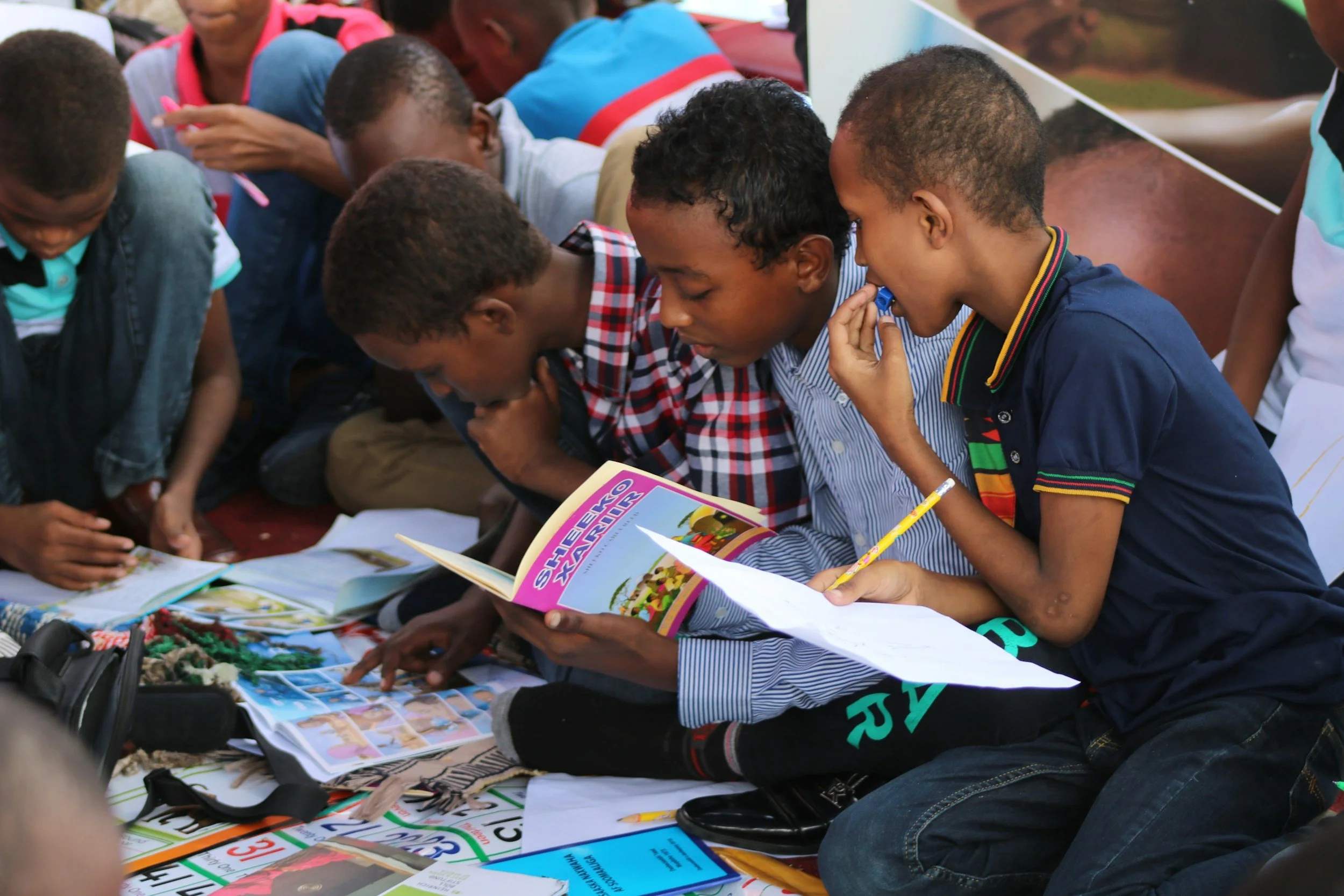
Help Them Find Their Reading People
Reading can feel like a lonely hobby if no one around you is doing it. But what if it felt like being part of a club?
Kids are wired for community…even introverted ones. So let’s use that to our advantage.
Ways to Build a Peer Reading Network:
Find a library book club or storytime (great for social butterflies).
Organize a reading challenge with cousins or friends (stickers and snacks = instant motivation).
Start a book swap with friends or neighbors. Let kids “check out” each other’s favorite reads like a mini library. Bonus points for adding bookmarks or “review” cards.
Host a reading picnic. Invite a few families, pack snacks, and have kids bring a book to read aloud or quietly under a tree.
Make a “Reading Pen Pal” connection. Set up a book-loving cousin or friend to mail short letters or drawings about what they’re reading, and encourage your child to write back.
Celebrate book milestones together. When a few kids finish the same book or series, plan a themed party or movie night (think: “Pizza & Pajamas: Dog Man Edition”)
Even just seeing other kids reading can help your child feel like they’re not the only one doing it.
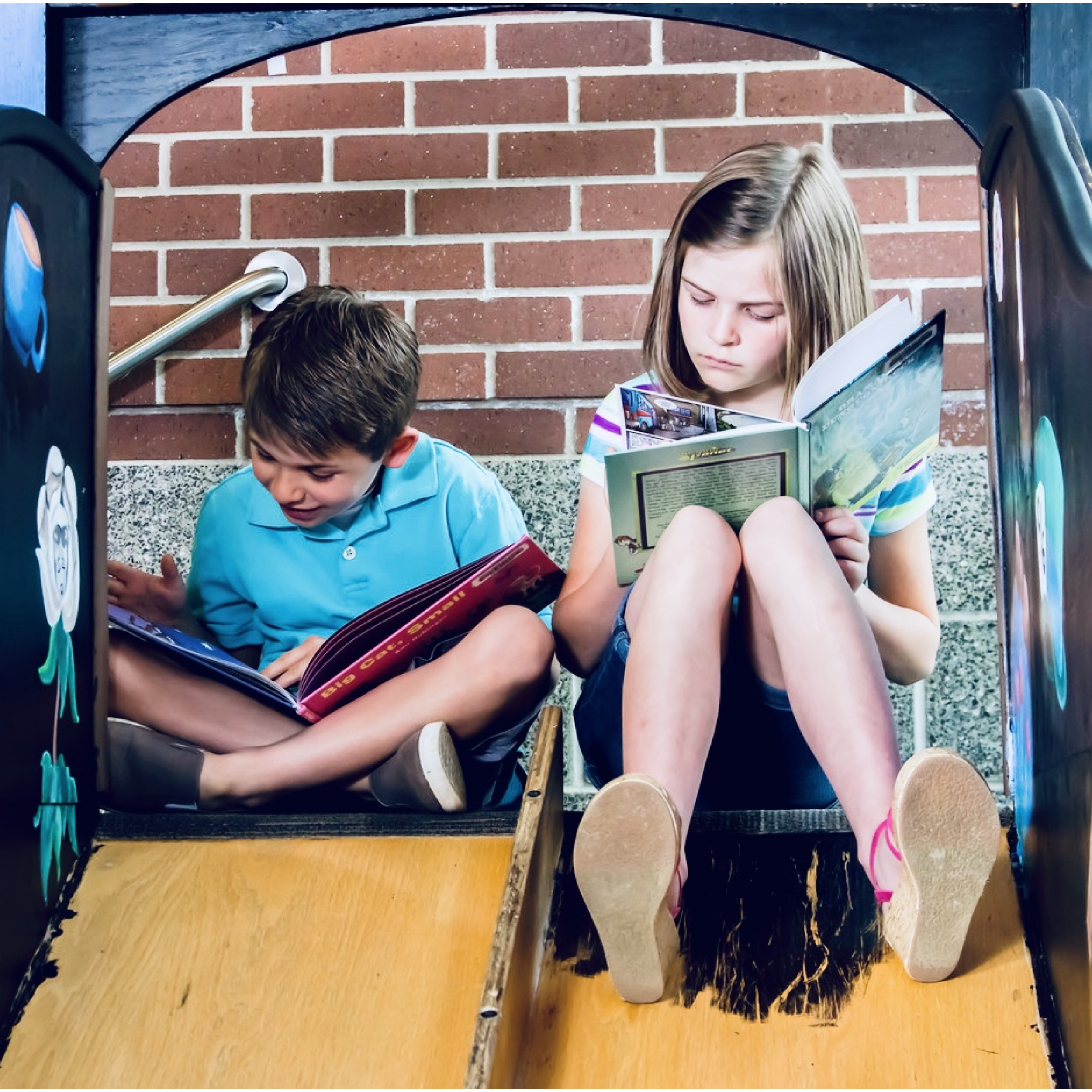
Make Reading a Family Thing
That sense of belonging? It starts at home.
Reading doesn’t have to be something your child does alone, or only when they’re told to. When books are part of your family’s everyday life, they feel less like a task and more like a shared experience.
Family reading time can be simple: 15 minutes before bed, a weekend audiobook during errands, or everyone curled up with their own books after dinner. You can even start a low-pressure family book club where each person takes a turn choosing the book, snacks are always involved, and nobody is forced to write a book report. It’s not about perfection, it’s about connection.
Want to make it even more fun? Try a buddy reading system, where siblings read to each other or take turns with pages (even pre-readers love being part of it!). Or create a “to be read” jar filled with suggestions from everyone in the family. Then take turns picking your next read like a surprise book lottery. Little moments like these help your child see that reading isn’t just a school thing…it’s a family thing.
Schedule It (But Make It Flexible)
Some kids love knowing exactly what’s coming next. Others… not so much. When it comes to reading, a little structure can help—but it shouldn’t feel like one more thing on the to-do list. The goal isn’t a perfectly timed reading routine; it’s just creating consistent moments where books show up in their day.
Here are a few ways to weave reading into your family's rhythm:
Choose a time when your child is already calm. Bedtime is a classic, but it could also be right after breakfast, during snack time, or even while they’re winding down in the afternoon.
Keep it short and sweet. Ten to fifteen minutes is more than enough—especially for reluctant readers. If they’re into it, keep going. If not, you’ve still planted a seed.
Use visual cues. A sticker chart, a “reading calendar,” or even a simple checklist on the fridge can be motivating for kids who like to see their progress. Just make sure it feels fun, not like a chore.
Pair it with something cozy. Snuggle under a blanket, light a candle, or pour a cup of cocoa. Creating a peaceful vibe around reading time can make it something they look forward to (and you’ll look forward to it too).
Make space for flexibility. Some days might be full of errands, meltdowns, or unexpected chaos. That’s okay. Reading time doesn’t have to be every day to make a difference. What matters is that it’s most days, and that it feels good when it happens.
Reading routines don’t have to be rigid or perfect. They just need to feel doable—for you and your kid. Think of it as creating a habit that feels more like a break than a box to check. When reading is calm, low-pressure, and part of your child’s daily life, it slowly shifts from a “have to” into a “want to.”
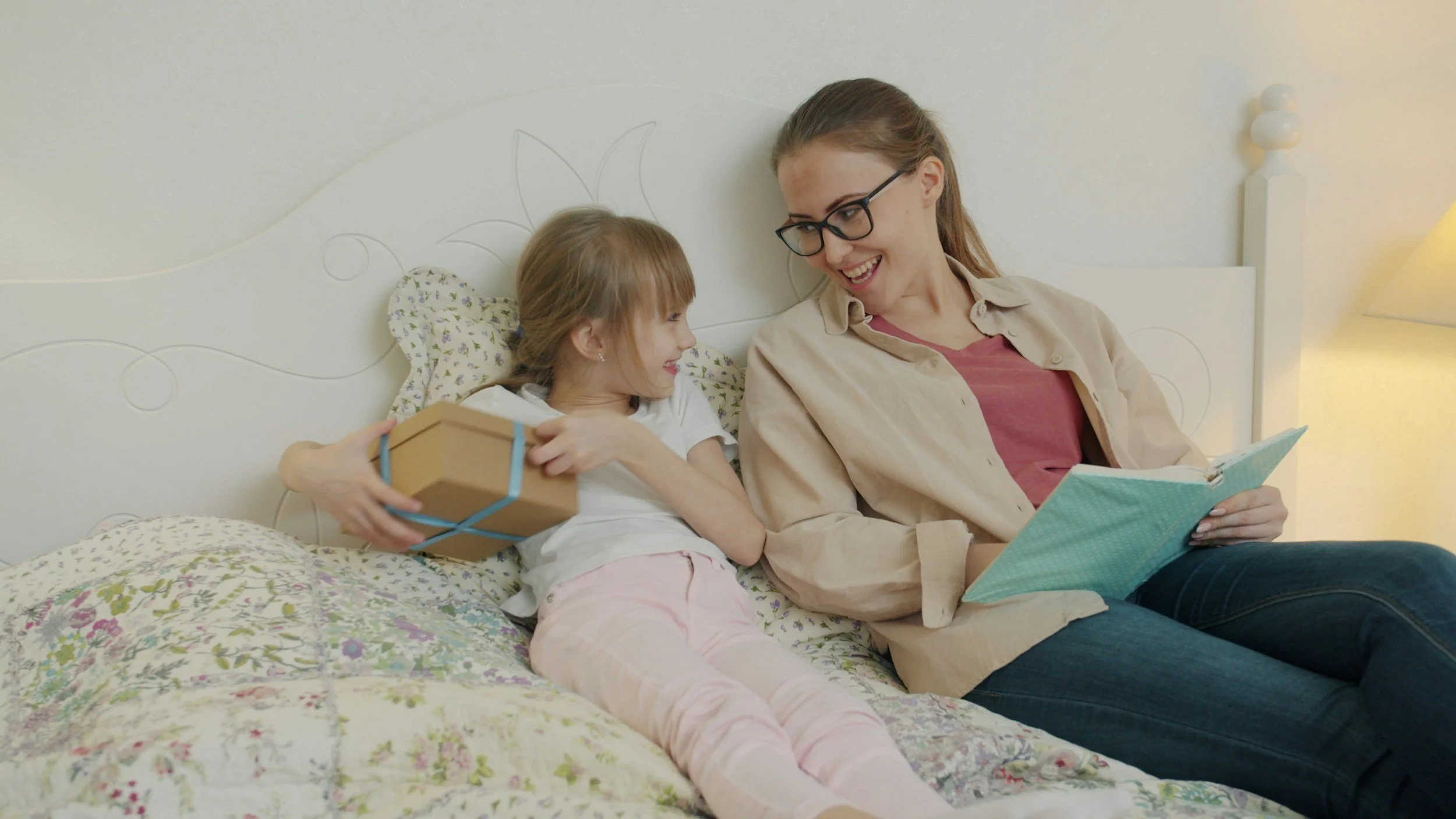
Lead by Example
Our kids are watching us…like, always!
If they never see you pick up a book, it’s hard for them to believe reading is worth doing.
You don’t have to suddenly turn into a full-time bookworm or start quoting Jane Austen at the breakfast table. But if you want to raise a reader, it helps to look like a reader—even in small ways.
Here’s how to make that happen in a realistic, doable way:
Keep a book or magazine visible and within reach. Whether it’s on your nightstand, next to the couch, or even in the diaper bag, let your child see books as something you choose for yourself.
Read beside them. During quiet time, while they’re coloring, or even while they flip through their own book, take a few minutes to read something of your own. Side-by-side reading can be a powerful model—without saying a word.
Talk about what you're reading. It doesn’t have to be deep. “I just read the funniest article,” or “This book totally surprised me” shows them that reading leads to curiosity, laughter, and conversation.
Let them interrupt. If they want to know what your book is about or ask questions—lean into it. That interest? That’s gold.
Celebrate your own reading wins. Just like we cheer when they finish a chapter, let them see you excited when you finish a book or find a new favorite author.
No need to perform or preach. Just let them catch you in the act. When they see that books are part of your world, they’re more likely to want them to be part of theirs too.
Ditch the Nagging. Embrace the Nudge.
Here’s the thing: the second reading feels like a chore; it’s game over.
No nagging. No bribing. No guilt-tripping with, “When I was your age, I loved reading.” (Tempting, but nope.)
Instead, offer gentle nudges:
“Want me to read the first page and see what you think?”
“This book made me laugh out loud. I thought of you.”
“Let’s just read one chapter while we wait for dinner.”
Make reading feel casual, low-pressure, and most of all…doable.
Celebrate Without Comparing
It’s so tempting to measure your child’s reading habits against other kids. But here’s the truth: every child’s reading journey looks different. Some sprint into chapter books, others take the scenic route with lots of starts, stops, and detours. What matters isn’t how fast they get there, it’s that they do.
So celebrate the small wins, even if they don’t look like much from the outside.
They picked up a book without being asked?
They read one page and then wandered off? Still a win.
They laughed at a part you read out loud? That’s engagement.
They brought a book in the car “just in case”? That’s interest.
They found a book they love and asked for the next in the series? Pop the sparkling cider!
Progress is progress. When we cheer it on with patience (and maybe a little quiet mom pride), we help our kids build a relationship with reading that’s based on confidence, not pressure.
Need a Quick Win? Make Reading Fun Without the Fuss
Here are a few easy ways to get books back on your child’s radar without turning it into a whole thing:
Start a “reading & snack” routine. Because everything’s better with snacks…even reading
Create a “Books to Movies” list. Read the book, then watch the movie together. Or, if they’re resistant to that idea, watch the movie first and read the book to see what the movie left out.
Read TO them, still! Yes…even big kids love being read to!
Play audiobooks in the car. It works AND it counts!
Every kid’s reading journey looks a little different, and that’s okay. You don’t need to have all the answers or the perfect routine; you just need to keep showing up with love, patience, and a willingness to meet your child where they are. Your child can discover the joy of reading on their terms. And when they do, it’ll be because you created the space for it to happen.
